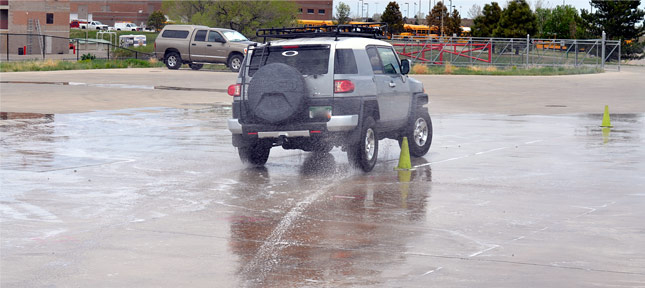
3-hour hands-on skid-control training designed to help drivers understand how a vehicle responds when traction changes—then practice calm, deliberate recovery techniques in a controlled environment. Through instructor-led exercises, participants build the awareness, vision, braking, and steering habits that support safer decisions on wet, snowy, icy, or otherwise slippery roads.
This is not a racing course. It is a practical driving-safety experience focused on recognizing loss of traction early, responding smoothly, and maintaining control.
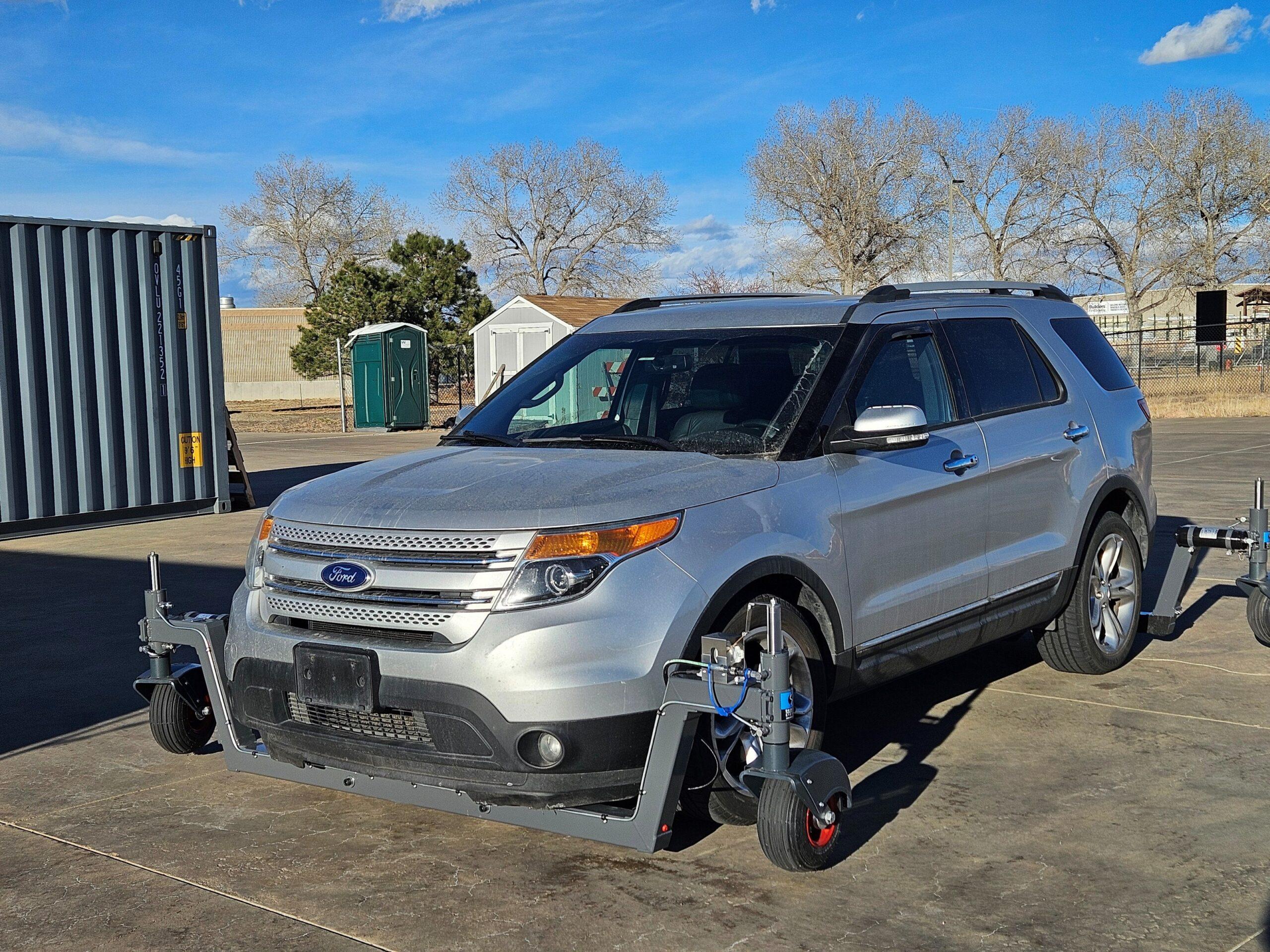
South Metro Safety Foundation’s Skid Car training vehicle.
What is a Skid Car?
See the Skid Car training system in action and learn how controlled simulation helps drivers recognize and respond to traction loss.
Video description: A silver SUV equipped with a Skid Car system, including small outrigger wheels at the front and rear, drives on an open paved area, performs swerving maneuvers, and spins out multiple times.
What You’ll Practice
Skid recognition and recovery: identify the early signs of a skid and use smooth steering, vision, and throttle/braking inputs to regain control.
Threshold braking: apply firm, controlled braking while keeping the vehicle stable and responsive.
Crash-avoidance steering: look ahead, manage space, and steer with purpose to avoid hazards.
Low-traction decision-making: learn how speed, surface conditions, and vehicle balance affect available traction.
Defensive-driving fundamentals: practice hand position, visual targeting, and calm responses under pressure.
Class Details
Length: 3 hours
Location: South Metro Safety Foundation controlled driving range in Parker, Colorado
Format: instructor-led, behind-the-wheel practice in a controlled setting
Before class: bring a valid driver’s license or permit and complete the required waiver before participating.
Scheduling: course dates, eligibility, and registration details will be provided with each class offering.
Controlled practice helps drivers turn knowledge into safer habits.
Before You Arrive
Please arrive ready to learn, wear weather-appropriate clothing, and follow all instructor directions. This training develops practical skills but does not replace attentive, lawful driving or safe choices for the current road conditions.