Meet the tool behind the training

What is a
Skid Car?

A real vehicle with adjustable grip—not a video game or a classroom simulator. Our instructor-controlled SKIDCAR system lets drivers experience reduced traction and practice better responses at controlled speeds.

It is the technology behind our Winter Driving & Skid Control class in Parker, Colorado.

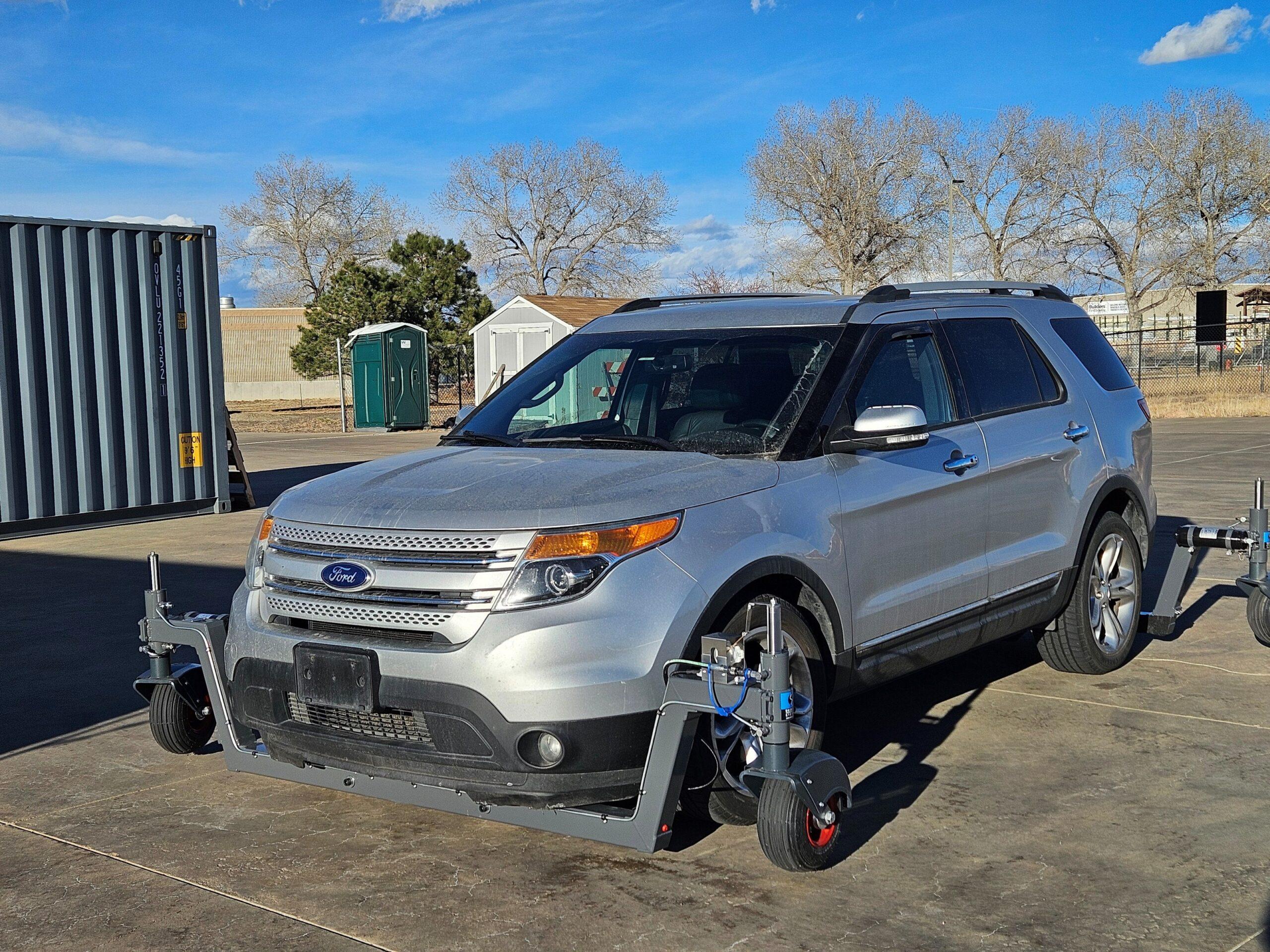
South Metro Safety Foundation’s SUV mounted within a wheeled hydraulic Skid Car training framework
South Metro Safety Foundation’s actual Skid Car training vehicle.
Real driving dynamics

Less grip. More opportunity to learn.

The distinctive wheels around the vehicle are part of a hydraulic training framework. They let an instructor change the amount of grip available to the vehicle’s tires.

01 / ADJUST THE GRIP

Instructor-controlled hydraulics

A wheeled steel frame is attached to the vehicle’s suspension. Hydraulic adjustments reduce or increase how much the vehicle’s tires are loaded against the pavement. Front and rear grip can be adjusted independently.

02 / FEEL THE RESPONSE

Practice at controlled speeds

Reduced grip lets drivers experience how steering, braking, speed, and vehicle balance affect control. It can demonstrate front-wheel grip loss—understeer—and rear-wheel grip loss—oversteer—without needing a naturally icy road.

03 / COACH AND REPEAT

A repeatable learning setting

The instructor can change the grip setting and restore grip quickly. Drivers can receive feedback and practice again in a controlled paved area, rather than trying to learn during an unexpected skid in traffic.

Technical explanation based on SKIDCAR System’s manufacturer FAQ. No training exercise is risk-free; site conditions, instruction, and driver participation matter.

Why a short session can make an impression

Feel it. Understand it. Try a better response.

Hearing “be smooth” is one thing. Feeling the difference between an abrupt input and a calmer one makes the lesson concrete.

Feedback arrives while you are driving

A driver can connect an action with its consequence immediately: a hurried steering correction, a braking input, or too much speed for the available grip. The instructor helps identify what happened and what to adjust.

Repeating the exercise gives the driver a chance to change that input during the same lesson. Practicing vision, speed management, and smoother controls can turn an abstract safety message into a specific behavior to work on.

The goal is not confidence in sliding. It is better respect for traction limits, earlier recognition of risk, and habits that help avoid losing grip.

A specialized tool, available to our community

Professional training technology.
Community access.

Not a typical driving-school experience

The manufacturer identifies police, fire, EMS, and military organizations as its primary customer base, alongside driver-training schools and other professional programs. This is specialized equipment—not something most drivers encounter in ordinary lessons.

We are fortunate to offer community drivers an opportunity to use this kind of training technology close to home in Parker. Instead of learning about a skid only after one occurs on the road, participants can explore reduced traction with instructor guidance.

Our focus is practical injury prevention: helping drivers understand their limits and make safer choices on winter, wet, and slippery roads.

Read the manufacturer’s description of the system and its users →
Watch the system in action

See what the Skid Car does

This demonstration shows how a vehicle with a Skid Car framework can experience reduced grip in a paved training area. The purpose of class is safer control and prevention—not recreating spins on public roads.

Visual description: A silver SUV fitted with a Skid Car framework and small outrigger wheels drives on an open paved area, makes swerving maneuvers, and spins during a reduced-grip demonstration.

Open the video directly →
Put the learning into practice

Winter Driving & Skid Control

Explore the 3-hour class, registration, tire and chain guidance, and winter vehicle-kit resources.

Questions? Email South Metro Safety Foundation or call 303-805-0228.